Posts Tagged ‘performance’

The Importance of Performance Based Call Center Management

Sunday, April 27th, 2008

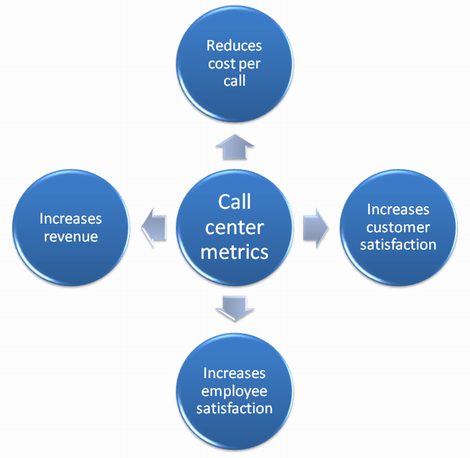
Metrics should be used to employ performance based call center management. With metrics, measuring the performance of call centers is made easier.

It is not easy managing a call center at all. A lot of people assume that it is easy to manage a call center, but it is not at all. This is because there are so many factors to consider here. However, it is very important to find effective ways and means to manage your call center, to ensure and facilitate its growth and success. So, how do you see your call center? How is its performance? If you have difficulty answering this question, then you should consider employing performance based call center management. This way, you can keep track of the performance of your call center representatives, to ensure quality service and growth for the establishment itself.

But how exactly can you keep track of the performance of every call center representative comprising your workforce? The answer to this is call center metrics. It is so hard to quantify the performance of every call center representative because there are so many factors to consider here. For instance, just how productive are the representatives at the job? Do they really satisfy the needs of the customers they handle? Do they give quality solutions to the problems presented by the customers? Are they able to come up with these solutions fast? And what about the average handling time? How long does the average phone call last for each representative? Attendance is also another factor to consider here. These are just some of the factors to consider when it comes to developing call center metrics. Surely there are more factors that have not been mentioned yet.

One important thing to remember about developing call center metrics is that less is actually better. Yes, there are many factors to consider; this is a point that has long been established already. However, when a large number of metrics are used to evaluate performance, then there is more room for extraneous factors. These extraneous factors just might make it all the more difficult to get down to the bottom of measuring performance. In fact, it is actually recommended to use just five metrics for your call center balanced scorecard. Most call centers nowadays use more than twenty-five metrics for their scorecard. Imagine how many extraneous factors can tamper with the real information that you should be measuring here! As much as possible, just limit your metrics to five. Choose the ones that are relevant to call center performance at its very core. The five metrics that are strongly recommended include Customer Satisfaction, Call Cost, First Call Resolution, Agent Efficiency or Utilization, and Overall Call Center Performance.

More often than not, you would find that one of the five metrics mentioned would actually be related to other metrics on the list as well. For instance, the metric Customer Satisfaction is actually influenced by a number of factors, which include the other recommended five metrics as well. When you want to quantify customer satisfaction, you would have to look at First Call Resolution, Call Quality, Speed of Answer, and the like. This is another reason why it is better to use only a few metrics when you want to employ performance based call center management. Different call centers in the industry might use different sets of metrics. This is understandable because the metrics here should be in line with corporate goals and objectives. Since these differ, then you can expect the metrics to differ as well.

The Role of Help Desk Key Performance Indicators

Friday, April 4th, 2008

Help desk key performance indicators are important factors to use when you want to measure the performance of call centers. These indicators quantify the necessary aspects for accurate measurement.

In the industry of call centers, it is very important to employ help desk key performance indicators. This is because these indicators are developed to evaluate how far along a certain call center is in achieving its corporate goals and objectives. To do this, key performance indicators or KPIs are then needed, to determine the performance of the help desk, and that of the call center as a whole.

The key to optimizing the manpower and resources of call centers lies on effective performance management measures. What are these performance management measures? These are actually quantifiable aspects used to effectively measure the performance of each and every member of the workforce. Performance management measures actually include constant monitoring of agent performance, formulation of objectives, proper training of agents, recognition of agents who have been excelling in terms of performance, and evaluation of agent performance. To do this efficiently, KPIs are also used for this endeavor.

KPIs are essential parts of performance management. In ensuring effective performance management of the help desk, you just cannot do without KPIs. In fact, these KPIs are very helpful in assisting agents and representatives as to what calls should be prioritized and how to process the calls that are being handled. However, you have to note that these KPIs should not be defined before the corporate goals and objectives of the call center are defined. This is because the KPIs exist to smoothen out the process of achieving these goals and objectives. This is the main purpose behind the existence of KPIs, after all. These key performance indicators assist in measuring the current performance of the help desk, in relation to the goals and objectives originally set. Thus, you cannot expect two or three help desks to be utilizing the same set of KPIs. This would mean that the call centers have the same goals and objectives that they want to achieve, and this is just not possible.

However, once these KPIs have been implemented, it is important for all members of the workforce to be made aware of them. After all, these are the quantifiable factors that would be used to measure the performance of everyone on the workforce, particularly the help desk. Also, making your workforce aware of these KPIs can motivate them to perform better as well. Priorities can also be aligned according to corporate goals and objectives. Furthermore, since KPIs have to be quantifiable in nature, this implies that certain software should be used to measure them accurately. Help desks should be ready to invest in such software for effective performance management.

It is actually wise to use a limited number of help desk key performance indicators. Less is more, as people would say. If you use many KPIs, measuring performance here would become too complicated. There would be too many extraneous factors that have influence on the whole measuring process. Thus, it is recommended to limit the number of KPIs to just five. Choose the KPIs that are relevant to the nature of the business itself. These KPIs should also be in accordance to the goals and objectives originally set. For the most part, these are the commonly used KPIs: first call resolution, call cost, agent efficiency, customer satisfaction, and overall call center performance.

Measure and Control Call Center Performance

Sunday, March 23rd, 2008

To measure and control call center performance, you will need to gauge the rate at which it is performing. These measures can show you how.

Simple call centers evolving into multi-channel contact centers do not just happen in a whiff. Adding or upgrading technologies and expanding staff skills are important following the addition of new applications such as e-mail and web chat. Also, it is necessary to determine which performance measurements should be used for this new kind of operation.

Performance measures that are associated with service are said to be the most important. These measures may work for both call and contact centers or change depending on the type of transaction.

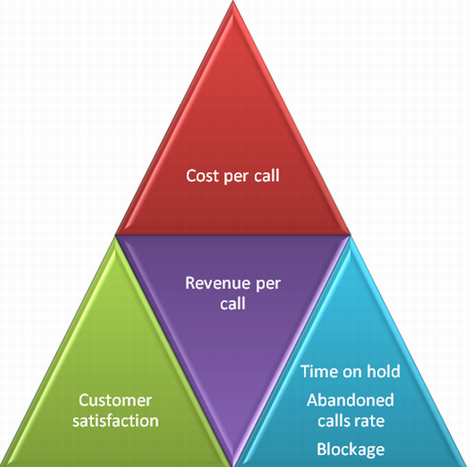
An example of call center performance measure is blockage. This accessibility measure indicates the rate of customers at which they cannot access the center at a specific time due to inadequate network facilities. Measures that indicate blockage or busy signals by occurrences of “busy trunk lines” are utilized by most call centers. Failure of a blockage goal enables a center to meet its rate of answer goal by blocking excess calls. It may appear as if the call center is doing a good job at managing call queues, but it can actually have a negative impact on customer accessibility.

The call center should also carefully know how much facilities are needed for email server capacity and bandwidth to avoid huge quantities of emails from overloading the system. The same goes for the number of lines that support fax services, which must be adequate enough to allow reasonable blockage.

Another way to measure call center performance is through abandon rate. Call centers usually gauge the number and rate of abandons because both correlate in terms of revenues and retention. However, it has to be noted that the abandon rate is not completely under the control of the call center. While the average waiting time in queue can affect abandons, there are a lot of other factors affecting this number, among which include availability of service alternatives, time of day, caller tolerance and many others. Also, while the abandon rate measure is not commonly related with email interactions, it applies, however, to web chat communications.

Self-service availability and utilization is also an important accessibility measure and is commonly gauged by self-service menu points and methodology, demographic group or time of day.

On the other hand, the most common measure for speed of answer in a call center is the service level. Meanwhile, the longest delay in queue (LDQ) is another gauge for speed of answer, which is used to indicate when it is necessary for immediate staffing reactions. LDQ is categorized into two namely longest delay to answer and longest delay to abandon. The former is the delay for a customer’s transaction to be finally handled by the agent and the latter is delay for a customer to abandon the contact.

These measures usually gauge the speed of call center performance. There are still many other performance measures applicable to call centers, both in-bound and multi-channel. These may be used to measure individual agent performance or overall call center operations. In all cases, these measures should be used to determine performance excellence as well as gaps that need improvement with different adjustments.

Customer Service Performance Tips

Monday, March 17th, 2008

These customer service performance tips can give your business the edge in today’s fiercely tough competition.

Competition nowadays has become even more cutthroat. Customer expectations are getting higher and there is more price comparing, among many factors that need to be considered in order to get a leg up in the competition. Competitors are doing all they can to keep their customers and gain new ones as well. It’s a simple fact that presents a cold, hard truth: Satisfy your customers and you keep them. If you can’t, then you lose them.

So how do you make sure you re not lagging far behind in this fiercely competitive environment? It’s that simple. Good, quality customer service. By putting value to your customer’s needs, having the ability to create strong customer relationships and finding tailor fit solutions to customer problems, you can ensure the success, if not the survival of your business. In whatever facet of doing business with customers, it is important to give them a higher quality of service than those of your competitors. You need to treat every customer as a positive experience and make the customer feel that s/he is highly valued in your business as well. By giving your customers a positive and pleasurable experience, they will keep coming back for more of your products and services.

Customers have also become more demanding today. There are a number of ways that you can do to win them over. A very important thing you should always keep in mind is to put your customers first. Focus on them and pay close attention to what they really need. Know and understand what their needs, concerns, expectations and priorities really are. This way, you go beyond more than just merely serving them but also demonstrating that you care.

Also, whether you admit it or don’t, you should keep in mind that your business exists because you are in sales. You are being constantly evaluated by your customers so each time you interact with them, you should always show concern and care for them. Remember that whatever you say or do can affect your relationship with the customer and the reputation of your business as well. By constantly giving them exceptional service, you build goodwill with your customers and strengthen your business’s sustainability and credibility as well.

To ensure a culture of customer service excellence in your company, get everyone in your team involved in establishing office guidelines and policies that require each one to maintain core values that are important to both the customers and everyone in your business.

Choose effective words or phrases that demonstrate care and professionalism in your everyday interaction with customers. Also, establish a system for measuring customer care. These include number of customer complaints, retention rates and satisfaction rates. Know which measures are important and commit to improve them.

It is only right to treat your staff properly if you want them to treat customers the same too. You cannot expect them to be ‘happy to serve’ your customers if they are not pleased with how you are treating them. Let your people feel that they are working with, and not for you. This will encourage true cooperation so that your business can achieve customer service excellence.

Making the Most from Helpdesk Efficiency Secrets

Sunday, February 17th, 2008

There are certain helpdesk efficiency secrets that can be used in ensuring the overall performance of helpdesks all over the world. Customer satisfaction is the underlying concept in these secrets.

The advent of technology brings about so many advantages and benefits that are resting on the palms of our hands. But not everything brought about by such technologies are positive. There are certain technical problems and issues that gizmos and gadgets just cannot do without. And this does not pertain to just gizmos and gadgets alone! There are so many services that warrant a call or two to helpdesks, just for technical support or assistance. Thus, in order for helpdesk agents to provide the quality service their customers are entitled to, then a certain level of efficiency should be achieved on their part as well. And this is where the importance of knowing certain helpdesk efficiency secrets sets in.

When you are discussing helpdesk efficiency, then you should keep in mind the underlying concept of customer satisfaction. This is the primary aim of all helpdesk agents. Now, there are certain things that can help any helpdesk agent in ensuring customer satisfaction. One of these is the establishment of a scorecard. This scorecard actually helps in quantifying aspects that determine helpdesk performance. Here lies the concepts that have been used for some time now, and these are the number of calls answered, as well as the length of the calls that have been answered. The basic premise here is the more calls the agent receives, then the more people he is able to help. To be able to entertain more calls, then the handling time for each call should also be as short as possible. This is the quantitative side in helpdesk performance.

There is also a qualitative side that you just cannot do without. The number and length of calls are not enough to ensure customer satisfaction. In fact, customers do not really care how long their calls would be, so as long as the issue or the problem is resolved. Thus, this should also be included in the equation, to ensure helpdesk efficiency.

For these to be strongly implemented, then the needs of your customers should be evaluated and outlined as clearly as possible. This way, you can easily determine the benchmarks needed in the whole process. The ability to foresee the needs of your customers is vital here. As helpdesk agents, you should know the features of the products you are handling inside and out, so that you will have a glimpse of the possible glitches and complaints your customers might have. You also have to remember that not all of your customers have the technical knowledge that is needed in operating your products efficiently. As helpdesk agents, you have to be patient when handling these matters. Remember that your job is to satisfy each and every customer. Keep this in mind, especially during the times when handling calls becomes difficult.

Lastly, the proficiency and productivity of helpdesk agents should be plotted on the scorecard as well. You have to make sure that the helpdesk agents you hire are as productive as they come. This way, customer satisfaction is easier to achieve. Thus, you should monitor the performance of each of your agents. You should check the call abandon rates of your agents for this aspect. Call abandon here actually means that the agent himself did not bother to take a call that has been routed to his line. This is a strong indication of irresponsibility. Thus, helpdesk agents with high call abandon rates should be constantly monitored.

Tips for the Manager: How to Upgrade Customer Service Performance

Sunday, February 10th, 2008

Leading the customer service team to attaining a commendable customer service performance is full of challenges. There are several simple ways on how this could be achieved.

There is always a heavy demand for a good customer service performance. On the business front, a reliable customer service unit is one of the main factors that help bring about a healthy revenue flow to the company. When there is an excellent customer service, it is logical that there would be a sustained volume of loyal patrons and customers. In the end, this would lead to higher sales and a steady flow of income for the company.

If as a manager, you are aiming for a high customer service performance, experts advice that you target providing an extraordinary service to customers. Clients are sources of income for your unit so make sure they are well served and well treated by your team. Here are seven of the most effective tips that would help you guide the customer service team towards a better and more sustained performance.

1. Be extraordinary. Your team might have different ideas and concepts of being extraordinary. It would be better if you would set a standard concept for the word and be clear that the concept set for the team is only applicable to team efforts. This way, everyone would agree to one standard definition for the word and eventually have a consensus of how being extraordinary could be applied to real life situations particularly in the customer service operations.

2. Allow team members to approach you when they are not sure about any provision regarding the customer service operations. Because of this, make your self highly approachable and accessible most of the time. That means, you should always be around especially during occasions when problems arise.

3. Motivate the team to be extraordinary. To do that, orient and brief the team to further and more clearly understand what there is to understand. This way, they would be better equipped into do better in what they do. As a manager, you should also respect individuality and allow each team members to retain their individuality. Advocate sincerity, as it would help better establish rapport between customer service representatives and clients.

4. Share helpful information. If you have encountered new knowledge that may be of great help to operations, immediately share this to everyone in the team. Doing so would help you ensure that everyone is well informed. Eventually, this would translate to better customer service.

5. Share commitment. As a manager, of course, you are expected to be highly committed to your job. You are an effective manager if you would be able to make your team as committed as you are. Motivate the team to reach goals and targets and improve the unit’s overall performance.

6. Be patient. Significant increases in sales do not happen overnight. Be patient to wait for sometime until target results and outcomes are met.

7. Be prepared for challenges and react to such setbacks accordingly. Who says attaining high levels of customer service performance is that easy? A team would succeed on collective efforts aside from having a highly effective manager that handles the team.

Crucial Metrics that Measure Call Center Performance

Sunday, January 27th, 2008

Identifying the metrics or key performance indicators (KPI) that really matters is crucial for managers to measure call center performance.  These metrics should not be entirely agent-centric. Rather, customer satisfaction and loyalty should also be taken into account.

Many experts now consider the important role that key performance indicators (KPIs) play in measuring call center performance. Along with this, they recognize the need to narrow down KPIs to the metrics that really matters.

Traditionally, performance management systems in call centers used to really on simple measurements like handling times, talk times, wrap times, and idle times as the primary criteria for evaluating agent efficiency. With certain technologies like predictive dialers and automatic call distribution (ACD) systems, it was very easy to access, compile and interpret data on agent-centric efficiency metrics that have been mentioned previously.

While these information do provide call center managers accurate information about how their agents perform, they do not necessarily dwell on overall customer experience. Likewise, these efficiency measures do not take into account the performance of a call center in line with its corporate goals.

The emergence of new technologies that enable call centers to obtain customer interaction analysis has benefited call center managers by enabling them to run their usual operations and at the same time, determine how the entire organization vis a vis their corporate goals. Unlike traditional call center efficiency reports, these new technologies focus on improving the overall productivity of call centers in conjunction with improving customer satisfaction ratings.

Call center management are faced with the dilemma of balancing productivity goals of the entire organization and the improvement of call center customer experience.  Managers, more often than not, hire additional agents especially during peak times when frequency of inbound calls is expected to rise. At the same time, they can not hire as many agents as they want because agent salaries account for almost 70% of call center expenses.

Along with this balancing dilemma, it is also a challenge for call center managers not to rely more on agent-centric measurements as indicators of success. Doing so tends to disregard other KPIs such as customer satisfaction and loyalty which should have been considered as primary critical success factors. Experts on call centers, upon thorough analysis, now find the need for call center managers to identify metrics that will help them identify which among the agents are able to meet quantitative goals at the same time, provide top-notch customer service.

By obtaining data on talk time and first call resolution (FCR), it becomes easier to identify which among the agents excel in solving customer problems within the least amount of time.

Most call center technologies can easily provide information of up to 25 metrics at a time. While these can be used as indicators of agent and call center efficiency, experts recommend that only 5 metrics ideally measures overall call center performance. These five KPIs are cost per call, customer satisfaction, first contact resolution (FCR) rate, agent utilization and aggregate call performance. These metrics are based on the Pareto or 80/20 principle which states that from these 5 indicators, 80% of performance measurement and call center management values is obtained. These success factors, likewise, determine the Balanced Score of a call center which quantifies the aggregate efficiency of a call center over time.

How to Boost Call Center Performance

Monday, January 21st, 2008

Your task as a call center manager is to make sure call center performance is high as revenue would depend on it. There are several ways on how you can ensure this.

Managing a call center business is never an easy task. There is always pressure because there is an evident and abrupt need to monitor performance. Of all the types of businesses, call centers are different because operations heavily rely on the quality of call services the personnel are providing, In other words, call centers are different in that revenues rely on how persuasive and effective the staff are in handling telephone calls and marketing products and services via the telephone.

As a call center manager, your challenge is how to manage a pool of people who are of different personalities and demographics. There is a need to guide and manage these people accordingly and effectively as to ensure their performances are great and yielding to productive results. Here are several practical guidelines that are designed to help call center managers bolster call center performance.

1. Choose the best and most reliable personnel for the job. With this recommendation is the reminder that good call center management starts the moment you hire staff for your business. Hiring the right people is imperative because the business would heavily rely on them. Choose people who are good at carrying conversations, adept in the industry and very much motivated to work within a team.

2. Before allowing the hired personnel to go live or conduct call transactions, make sure they are properly and adequately trained. This is the reason why it is a requirement that any call center company should conduct and sponsor a special training program for its newly hired personnel. Be careful and be strategic when developing, designing and devising such training efforts. Make sure the series of seminars to be held would touch on key issues and concerns regarding overall attitude, listening skills, scripting, conversing, politeness, patience, persuasion, referral and effective speaking practices.

3. Call center operations basically run scripts. There should be a standard flow of conversation. Usually, a protocol or script is provided to personnel to guide them on how to handle a call or a conversation. When writing that script, be particularly attentive and open minded to know which lines would be polite, convincing and noteworthy.

4. Establish a good and effective system in monitoring team performance regularly. It would be advisable if you would be able to monitor how the team is faring on a daily, weekly and monthly basis. Doing so would help you immediately find out if there would be modifications needed for the flow or if your people are doing what is appropriate. Adopting a good call center performance metrics for personnel would also be of great help since there is a need to monitor the performance of each of the team members.

5. Build enthusiasm in the workplace. As much as possible, do not pressure the team to do good. Let them enjoy the workplace so that they would be more enthusiastic in reaching targets and goals. As a manager, you could do a lot in ensuing that the workplace turns really conducive for a pleasurable work.

If you are able to follow such tips, expect that in no time, call center performance would be significantly boosted in no time.

The Importance of Measuring Helpdesk Performance

Sunday, December 30th, 2007

Measuring Helpdesk performance can ensure customer satisfaction, which is the primary goal in the business. With a properly established system, monitoring customer satisfaction would be easier as well.

The world of technology brings us many, many benefits that all of us can enjoy. However, with such benefits, there are also a number of technical issues that one just cannot do without. This is because, as high-tech as these gadgets may be, there will indeed come a time when you would need technical support for whatever glitches the features may have.

And with this comes the importance of Helpdesk. Simply put, Helpdesk refers to the mediators that make the features of fads and gadgets easier for their users. Customer satisfaction is the underlying concept Helpdesks aim for. Because of this, it is of such importance to measure Helpdesk performance as well.

Since the basic aim of Helpdesks is providing customer satisfaction, then one of their aims should also be to be as effective at their jobs as possible. For this purpose, a scorecard should then be developed to quantify Helpdesk performance. Ever since the concept of Helpdesk surfaced, there have been two aspects used for this: the number of answers called, and the length of these calls.

The less time Helpdesk agents spend resolving the issue for each caller, the better. The concept here is not just, “The more, the merrier”, but “The more, the better.” If a Helpdesk agent would spend less time for each call, then he or she would be able to handle more calls. Thus, it is very important to keep track of the number of calls answered and the length of these calls.

However, Helpdesk performance should not be measured by just using quantity as basis. Quality should be measured as well. With just quantity as basis, there would be a quota to hit for every Helpdesk agent, of course. It would be very easy to lose track of the concept of customer satisfaction here, especially if you would focus your attention on just getting as many calls as possible. Quality should still be meshed in the equation.

By including customer satisfaction in your scorecard, determining the benchmarks in the evaluation of the needs of customers would be so much easier. It is very important to be able to foresee the needs of your customers, especially when it comes to the features and such of your products. You have to bear in mind that not all customers would have the technical knowledge that you have about the products. Of course, there are those customers who are techie in nature.

These are the people who make the job of Helpdesks easier. Still, there are those who are not familiar with the technology products come with. These are the people who would need guidance from the beginning to the end of the call. This takes patience and effort on the part of Helpdesk agents.

The proficiency of Helpdesk agents should also be included on the scorecard. One way to do this is to monitor the call abandon rates of the agents. High call abandon rates would strongly imply that the agent is not entertaining the customers that have rung his or her line. The figures for this aspect are one effective way of measuring Helpdesk performance. Agents with high call abandon rates can indeed be pegged as inefficient at the job. Monitoring Helpdesk performance this way can help any business deal with such employees accordingly.

Improving Customer Service Performance to Increase Customer Satisfaction

Wednesday, December 5th, 2007

Various call centers have recognized the need to improve their customer service performance to increase customer satisfaction. In line with this, necessary steps would have to be made to provide high quality services to clients.

Call centers are created to provide marketing and product support to certain products and services. These centers are used by major businesses like utility companies, mail order catalogue firms and banks as a means of directly interacting with their customers. Since they are primarily created to benefit the customers, customer service performance is considered an important indicator of call center efficiency.

A call center is classified based on the kind of calls that its agents make. Outbound call centers are those whose agents place calls to potential customers of a certain product or service. Inbound call centers, on the other hand, receive calls from customers. These people call to ask questions about a product or service, report a malfunction, or ask for assistance on how to use a product or avail of a service. In line with the efficient handling of calls, call center agents are usually organized into a multi-tier support system.

In this operation model, the first tier is generally composed of agents who direct calls to the appropriate department and who provides general directory information. Calls are forwarded to second-tier agents if the customers insist on more assistance. Usually, it is at this stage that most calls are resolved. If a customer issue is still not resolved at this stage, calls are then forwarded to the third-tier which are primarily comprised of product engineers and highly skilled technical support staff.

Call center managers are faced with the challenge of balancing requirements of cost effectiveness and the provision of quality services to customers. Managements of call centers need to hire sufficient staff to answer the inbound calls from customers. They also need to ensure that with the number of agents that they have, they would be able to provide quality services to their clients. Managers often use demand estimation and telecommunication forecasting techniques to determine the level of staff that is required at a certain time. Salaries of agents make up the bulk of call center expenses which is why managers should see to it that agents are effectively utilized.

To achieve this, performance management systems are set up in call centers to measure how agents perform. Different technologies are also employed to effectively manage the large volume of calls that call centers usually manage. These technologies allow calls to be queued and processed so that agents are kept as productive throughout their shift. Some of these technologies include predictive dialing, automatic call distribution (ACD), computer telephony integration (CTI), and customer interaction management (CIM) solutions.

While call centers pay attention to agent statistics such as average talk time, average handling time and service levels, call center management now gives weight on customer satisfaction. For instance, metrics such as First Call Resolution (FCR) rates is now among the most used as statistics show that FCR is directly related to customer satisfaction. In fact, the most effective way of improving the customer service performance of a call center is by increasing its FCR rates. To improve FCR, agent training, agent incentives and investments in skills improvement should be made.