Top Call Center Metrics You Should Know About

January 15th, 2012

Why are call center metrics an object of burning discussions and serious concerns? What makes them so important? These questions worry the majority of call center owners, who aim at promoting the performance of their organizations and generating revenue. Let us look for the most reasonable answers to these questions. To do that, we should first discover the essence of these metrics and their most popular and effective types.

Importance of first resolution calls

Importance of first resolution calls

As a matter of fact, the number of call center metrics is really impressive. No wonder, a lot of business owners (especially those who are just starting their career) find them quite puzzling. It is not easy to calculate their number, but implementation of each metric will certainly affect your company and employees. Therefore, the most reasonable solution is to define the obvious drawbacks of your call center (if possible) even before you start searching for call center metrics to improve the situation. Do not be afraid that you will not cope with this task. On the contrary, properly implemented metrics will help you identify what problems are observed in your organization nowadays. You can also utilize the results you will get to enhance the situation.

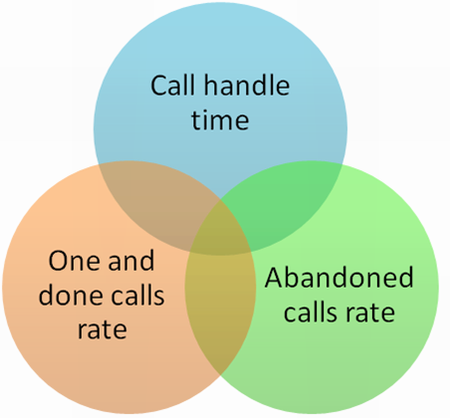
At present, experts point out the following metrics that are extremely important for each reputable call center: service level, customer and employee satisfaction, contact quality, first-call resolution, agent attrition, schedule adherence, forecast accuracy. Though these metrics are quite significant, we will focus on those that seem more critical for this kind of business. What we talk about is average answer speed, abandonment rate and average call handle time.

Some important call center benchmarks

Some important call center benchmarks

ASA or Average Speed of Answer is associated with the amount of time a caller waits on-line waiting for a call center agent to answer his/her call. This metric is closely related to another one, known as service level. The latter helps measure the required amount of time more accurately so that it could be easier for the managers to decide on further actions.

The Abandonment Rate Metric indicates the approximate percentage of callers who abandon their calls before agents answer them. This is determined by means of using the so-called “Automatic Call Distribution Report”. To define the required index, it is essential to know not only the amount of abandoned calls, but that of answered calls as well. Experts underline, however, that this metric may not be fully reliable, because there are diverse factors that can make callers hang up ahead of time.

When it comes to the assessment of the Average Call Handle Time, it is essential to realize that it is one of the basic tools that help assess the quality of work and professionalism of agents. As soon as you find out the amount of calls handled by each employee, you will decide whether your agents need additional training to perform better or not.

All metrics you implement in your call center should be measured regularly. This is the only way to track all changes that going on in your company.

Call Center Metrics: Can they Be Effective When Managing Home-Based Agents?

January 15th, 2012

The advancement of online technologies has opened a broad range of options to all people. Business owners have found numerous ways to benefit from this fact as well. Call center managers, for example, consider it very convenient to use the services of home-based employees. However, we should admit that this innovation has resulted in unpredictable challenges, which are initially associated with the effectiveness of remote staff management. How can you identify whether a person performs his/her duties appropriately without having a chance to control him/her, for instance? Are your employees responsible enough to contribute to better performance of your company? There are much more similar questions that bother call center managers. Therefore, they have found a perfect way out of this situation. They have learnt to apply specific measures that help them assess their remote agents without any particular effort.

Business (call center) optimization

Business (call center) optimization

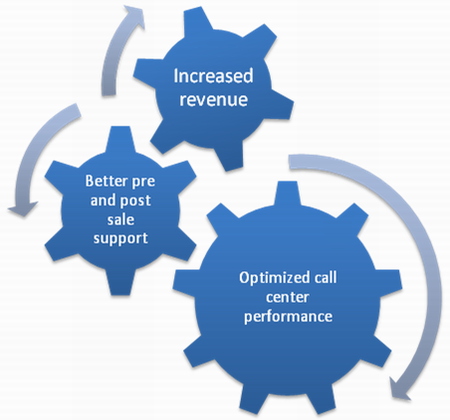
Properly implemented call center metrics prove to be a powerful tool for the enhancement of the whole process of working. As far as they are characterized as non-intrusive, they do not prevent employees from performing their regular duties. They simply help the company management understand their current problems and ways of their solution. They also motivate the staff to work better for the benefit of the organization.

Major tasks of a typical call center

Major tasks of a typical call center

One of the drawbacks of employing home-based agents is that they do not cooperate with each other. Some of them admit that they lack communication and professional assistance, which is frequently reflected in the quality of their work.  This is where call center metrics may become helpful. They provide a great opportunity to unite both in-house and remote employees into a single qualified team. Modern online technologies make it possible today to display these metrics on any desktop applications, thus providing home-based staff with the same data related to current phone call traffic as office employees have. Call center managers have learnt to measure the productivity of remote agents’ work by means of the above mentioned information technologies as well. No matter what call center metrics you decide to apply in your company, you will not face problems with home-based employees. Reliable Internet connection is what will help you succeed in this process.

The growing number of call center managers realize the benefits of employing remote agents these days and try their best effort to utilize the most important call center metrics (such as average call handle time, first-call resolution rate, service level, employee and customer satisfaction,  forecasting accuracy, contact quality etc.) to their advantage.

Call Center Metrics and Their Unique Essence

January 15th, 2012

Conscientious call center managers, who are concerned with the profitability and quality performance of their organization, are expected to think far beyond metrics they implement. They should initially understand the needs of their clients and try their best effort in order to meet their requirements. They should define their sales objectives as well as other effective ways of successful organization advancement. Nonetheless, it is impossible to imagine a reputable call center without properly implemented and measured metrics that always affect its performance. As a result, there is an increased need to learn more about those call center metrics that really matter in this business.

Communication directions

Communication directions

When we talk about the most significant measures, we should focus on such metrics as service level (general response time), adherence to a particular schedule and forecasting accuracy. Let us start with the service level first, since it is one of the most common metrics implemented in organizations of this type. If you fail to put this metric in place and measure it properly, you will not be able to find out how accessible your call center is to those customers who use its services. It also helps identify the approximate amount of agents required to ensure efficient servicing as well as basic criteria used to compare the performance of your call center with that of your competitors. Response time and service level matter for those call center managers who need to define the connection between the amount of resources they have and potential ability to reach the objectives they have set.

Schedule adherence is an important call center metric that helps measure the amount of time an agent is involved into the process of handling calls during his/her shift. The majority of call centers wish to achieve the 90% rate here, which means that each agent should be able to handle incoming calls 54 minutes during each hour. This measure is comprised of the overall amount of time an employee spends when working with clients and the amount of time he/she spends in the so-called “after-call work”, which implies waiting for the next incoming call or making outbound calls, for example.

Evaluation of business units

Evaluation of business units

Forecasting Accuracy is a great call center performance metric, which involves the correlation between the amount of forecasted incoming calls and their actual quantity. This measure is highly important, because if managers of these organizations underestimate the existing demand for call center services, it may result in lack of workforce, which, in its turn, will lead to unsatisfied customers, longer wait time in queues etc. Overestimation of this metric, however, may lead to overstaffing, excessive money expenditures and other related problems that will reduce the expected revenue.

What Call Center Metrics Can Help You Make Quality Agent Assessment?

January 15th, 2012

What is one of the most impressive things about a call center? This question may be answered in several ways depending on what point exactly one may focus. If we talk about a call center as an organization, the performance of which is of great importance both for its managers and customers, then we should undoubtedly discuss the implementation of metrics and their significance. As far as metrics are the basic measures of productivity and quality of this organization, it seems vital to define which of them are the most helpful when it comes to the assessment of call center agents. Listed below are key metrics that seriously affect the level of workforce performance.

List of most common call center kpis

List of most common call center kpis

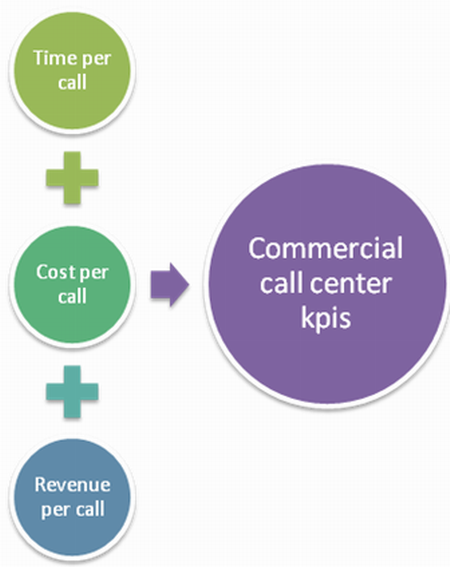
Average Handle Time (also referred to as Average Call Duration) has always been considered one of the most influential call center metrics. Managers of these organizations pay special attention to it, because it affects the level of customer satisfaction. On the one hand, it seems quite understandable that if agents manage to handle incoming calls quickly, it will promote the popularity of a call center. On the other hand, though, it often turns out that the speed of call handling does not imply the efficiency of this process. This is because an agent may fail to provide the customer with valuable information he/she expects to get, for example. This negatively affects the overall performance of this organization. Therefore, its managers should strive for maintaining a reasonable equilibrium between the amount of handled calls and other metrics, such as level of customer satisfaction, revenue per each call and the rate of first-call problem resolution.

Some important kpis to be measured in a call center

Some important kpis to be measured in a call center

The next metric we will focus at is ACW (After Call Work), which is also sometimes referred to as “Wrap time”. Actually, the significance of this aspect is quite obvious, since each agent is expected to move quickly from one call to another. At the same time, a lot of call center managers overlook the fact that their employees need at least a few minutes of rest between the call they answer, since it will for sure increase their ability to handle the upcoming call positively.

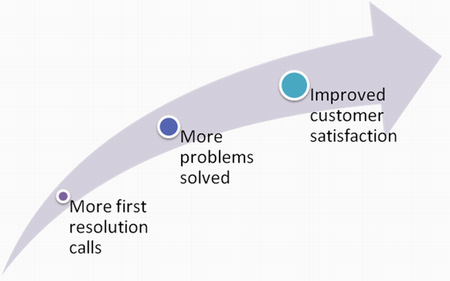
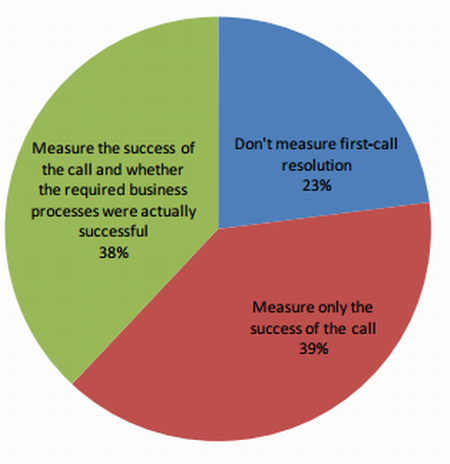
If you wish your call center to become more profitable and popular with customers, then First-Call Resolution metric is what you should obligatory implement for the assessment of your agents. There is no doubt about the fact that this rate is highly essential for each organization, since it affects its efficiency, popularity and success. So, if you have not considered it by this time, then you are highly recommended to do that right away.

The Most Powerful Call Center KPIs

December 3rd, 2011

Call centers are primarily large offices, which are staffed with agents who either receive or make phone calls with the only purpose – to satisfy the needs of the company’s customers and increase its popularity and productivity.  There are call centers that aim at answering incoming calls only (for example, those that are related to banks and are responsible for settling the clients’ problems) and those, which make outbound calls (such as survey organizations, for instance).

Call center BSC

Call center BSC

No matter what type of a call center you are managing at the moment, the main idea of its establishment implies providing people with extra convenience and support. However, it frequently turns out that not all customers can easily make use of those services business owners claim to offer them. If you have ever tried to contact a call center agent, then you probably know what we are talking about. The fact is that this procedure proves to be challenging and depressing due to numerous factors, which prevent a call center from performing its main functions. That is why, the increasing number of call center managers decide to implement useful key performance indicators (or KPIs), thus aiming to improve the situation and build the company’s reputation.

Call center goals

Call center goals

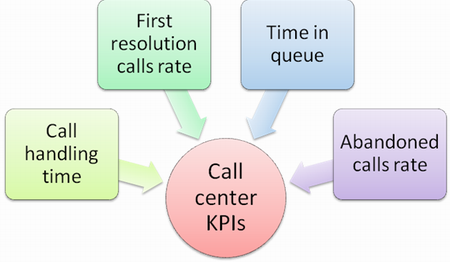
At present, we may differentiate between several KPIs that have a great impact upon the functioning of any call center and, as a result, advancement of your business. These include first call resolution, average call handle time, speed of answer, customer satisfaction etc. The latter, by the way, is one of the most influential and dominant metrics, since it helps define whether your clients are satisfied with the level of servicing they are offered or not. If you are seriously concerned with the success of your business, you should realize how important it is to set up this KPI and establish good relationships with your customers. The fact is that this metric (if implemented correctly) will enable you to keep track of the productivity of your workforce, thus contributing to the achievement of this objective.

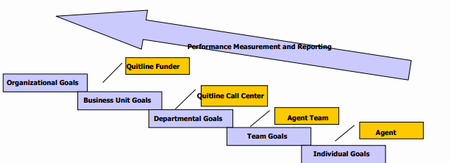
It is not a secret that all companies and organizations (call centers included), irrespective of the services they offer, have a set of short- and long-term goals they wish to achieve. You may be surprised, but such objectives may prevent these businesses from focusing on many important aspects, including the rate of customer satisfaction. This is where call center KPIs will prove to be useful, serving as the best reminders for them. They motivate the managers to be persistent in the process of achievement their goals, which eventually results both in the increased profits and reputation. This is exactly what you are striving for, aren’t you?

Call Center Performance Evaluation and Problems Associated With it

December 3rd, 2011

There are different techniques that enable business owners measure performance of their companies. KPI evaluation is one of them. It is applied in lots of industries nowadays and has already proved to be highly efficient in the process of call center functioning assessment. Unfortunately, there are certain problems associated with the implementation and validity of these indicators.

Main measures for call centers

Main measures for call centers

It does not really matter what metrics exactly you are going to analyze, you will always face the risk of using subjective and non-informative metrics. Another problem you may come across is inconsistency of those KPIs you wish to set up. It generally depends upon the amount of data sources you use. For example, you will not find it problematic to measure call time, but you will for sure be puzzled when evaluating the levels of customer or employee satisfaction, because the perception of people differs from one person to another. So, is there any way out of this situation? Let us find that out below.

KPIs in 4 perspectives

KPIs in 4 perspectives

The number of problems related to effective call center performance assessment in not limited to those mentioned above. There are much more of them to be solved today. The only reasonable solution here is to consider a particular number of KPIs at a time rather than analyze individual metrics. This will give an intrinsic and trustworthy idea of what exactly is going on in your call center. No wonder, the only efficient and powerful tool that may ensure the expected result is the Balanced Scorecard system, which adds importance and validity to those KPIs you are going to evaluate.

However, how can you be sure that call center metrics you implement using the Balanced Scorecard system are really applicable for your call center? Actually, the best way to make sure you are not mistaken with their selection is to define what exactly makes these KPIs valid. To start with, these metrics should be accurate, appropriate and collected from relevant data sources. In addition, they have to be clear and valuable. Unfortunately, not all metrics have these features and may not correspond to your business.

It frequently turns out that not all business managers realize the actual power of KPI metrics and the Balanced Scorecard system in general. They simply believe that the main objective of this tool is to measure the company’s performance and this is their main mistake. The truth is that properly chosen and implemented call center KPIs may provide you with the best diagnostic capacity, helping you identify basic problems that may prevent you from getting the most out of your business.

Why Should You Consider Call Center Metrics When Measuring Your Business Performance?

December 3rd, 2011

Call centers have become extremely popular in our society nowadays. This is because lots of businesses consider it important to provide their customers with centralized servicing and round-the-clock support. A call center is frequently nothing more than just an office, where agents receive incoming calls from the company’s clients or make corresponding outbound calls. They typically employ dozens of people in order to be able to meet all customers’ requirements.   Therefore their managers realize the importance of implementing call center metrics. However, they frequently face difficulties when it comes to the very process of their selection and tracking. This is because they do not know what to start with and how to encourage employees to contribute to successful call center performance.

Importance of excellent call center performance

Importance of excellent call center performance

If you are really concerned with effective improvement of your company, then you should definitely start with finding proper call center metrics to implement. The fact is that this task may be quite challenging simply because there are a lot of them these days and they all have particular benefits. However, you should know that not all metrics you may find will be right for your call center. Consequently, it is you who have to define what metrics exactly you would like to set up for your particular business with regard to its specialization, specific problems (if any) and current success. You should also pay special attention to those metrics, which can effectively satisfy the needs of your customers.

Indicative KPIs for call center

Indicative KPIs for call center

Now, let us proceed to the analysis of the most popular call center metrics, such as the average handle time, first call resolution rate, average answer speed, the approximate amount of talk time an agent needs to handle the call successfully, customer satisfaction etc. All of them are interrelated and may affect each other in different ways.  For example, if your employees will do their best effort to improve the average handle time only, this may have a negative impact upon the quality of incoming calls they receive. This is because they may fail to answer the callers’ questions or solve their problems properly. As a result, this will decrease both the rate of first call resolution and the level of customer satisfaction, thus affecting the company’s reputation.  As you see, it is of vital importance to consider not only quantity metrics, but those that are related to the quality of servicing as well. If you manage to cope with these tasks successfully, the performance of your company will be undoubtedly improved.

Enhance Your Business Performance with Call Center Metrics

December 3rd, 2011

The Balanced Scorecard system is widely implemented in lots of countries across the globe nowadays. Its main objective is to help the owners of companies identify whether their businesses are running effectively or not and make corresponding changes if necessary. Actually, this tool involves numerous metrics or key performance indicators (KPIs) you may apply in order to measure the performance of your business and define what factors exactly may prove to be critical for it. That is why there is no sense in implementing all the metrics you manage to come across. Some of them may simply be unnecessary, which will be just a waste of your time and money.  Instead, you are highly recommended to analyze the most popular and effective KPIs, which involve the average time of call response,  the punctuality and productivity of workforce, the level of customer satisfaction, effectiveness and speed of successful call handling, the approximate amount of time a customer is on hold waiting for his/her call to be answered etc. These are the most typical call center metrics, which may help you analyze whether its performance corresponds to your demands and expectation or not. The final purpose of implementing these metrics is to identify what factors require immediate enhancement for the benefit of your business.

Call center evaluation cycle

Call center evaluation cycle

Why are the above mentioned call center metrics of key importance in telemarketing industry?  The fact is that it would be not easy to manage, control and analyze all information related to any call center and draw corresponding conclusions without them. This is because trustworthy organizations of this type are typically large and involve dozens of agents that stick to the single program. It means that they handle hundreds (if not thousands) of incoming calls every day, which makes it nearly impossible to identify those factors that may have a negative impact upon the overall call center performance. This is what these standard metrics are generally used for. For example, if you manage to identify how well your employees are trained, you will be more likely to decide whether there is a necessity to implement any coaching techniques or not. This is how you will make your team more productive, thus helping them handle more calls successfully. It will eventually result in the reduction of the company’s expenses. Other call center metrics may help you achieve all your business objectives as well. Keep in mind that it is you who are responsible for the efficient call center management. So, leave your doubts behind and make use of the most beneficial call center metrics.

Major KPIs for call centers

Major KPIs for call centers

How to Improve the Performance of a Call Center

December 3rd, 2011

Everyone will agree on the fact that call centers are gaining immense popularity nowadays. More and more people use their services when they look for quality products or need to have their problems solved on time. No wonder, the increasing number of business owners consider it profitable to provide their customers with call center services, which can satisfy their particular needs, thus affecting the popularity and reputation of their companies. The only problem they frequently face is inability to evaluate the quality of servicing in a proper way. If you are concerned with this issue as well, then you should undoubtedly learn more about the Balanced Scorecard system and benefits it may offer you.

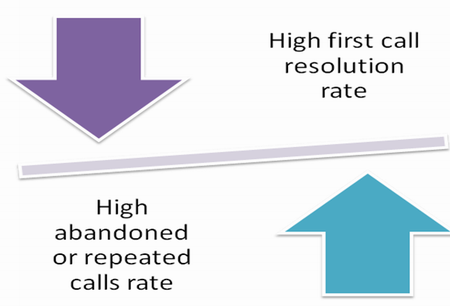
Call center kpi opposites

Call center kpi opposites

At present, there is no doubt about the fact that call centers may affect the performance of any company in different ways. It depends upon how productive their work really is. For example, if call center agents are well-trained and can find an individual approach to each client, this will increase the amount of successfully handled calls and the level of customer satisfaction in particular. On the other hand, clients will not appreciate it if the employees will not be able to provide them with the expected level of servicing simply because they lack communicative skills. These are only a few aspects that may have a serious impact upon the reputability of your business. If you do not wish to avoid problems of this type, you should think about making use of a highly useful tool known as call center BSC.

Call center bsc

Call center bsc

So, how is it better to measure the performance of a call center with the help of this system? As far as there are numerous customer support organizations that function on behalf of various companies, the process of evaluating their effectiveness may differ as well. The fact is that each organization may implement different metrics with regard to its particular needs and problems. That is why call center BSC is rightfully believed to offer universal metrics that will be relevant for any company. These measures generally involve average talk time (ATT), service level (SL), average call handling time, percentage of resolved and unresolved problems, amount of incoming calls successfully handled by call center agents per hour, level of customer satisfaction and amount of time that customers have to spend on hold when waiting for their calls to be taken. If you manage to pay attention to all these aspects, it will be much easier for you to define which of them needs enhancement and undertake special measures to improve the situation. Consequently, you will have more chances to boost your business and win your customers’ trust.

Call Center BSC Can Help You Satisfy the Needs of Your Clients

December 3rd, 2011

Are you the owner of any kind of business? If so, then you definitely aim at satisfying the needs of your customers. Actually, there is nothing surprising about that, since the number of clients substantially affects the popularity and profitability of any company. So, what is the best way to be sure that your customers are satisfied with the level of servicing you are ready to offer them at the moment? The answer to this question seems to be quite easy at the first sight: you just have to make sure that your services or products correspond to their demands and requirements. The truth is, however, that lots of business owners face problems when it comes to accomplishing this task. Fortunately, there is something you can do to improve the situation. The Balanced Scorecard (BSC) is what you really need. Let us find out more about this tool and ways of its implementation.

The process of implementing BSC

The process of implementing BSC

The Balanced Scorecard helps business owners evaluate the effectiveness of their companies and identify those factors, which need immediate improvement. In other words, this tool may give you an idea of what is going on in your company and whether there is something you can do in order to change the situation for the better. No wonder, this system is frequently used in customer oriented call centers, since their basic objectives are to meet the expectations of their clients, generate high amount of sales and do everything to help people solve their problems as quickly as possible. It is quite understandable that if callers get what they are looking for, they will be more likely to deal with your company once again.

4 BSC perspectives

4 BSC perspectives

So, what does call center BSC involve? It uses four main perspectives in order to help you achieve all the missions you have set for your business. These perspectives include learning and professional growth, customer satisfaction, cost and profits and basic client-oriented processes. Each of these points, in its turn, incorporates a number of aspects, which are closely related to it. For example, when we talk about cost and profits, you will probably like to include the following points to this perspective: the cost of each separate outbound call, the revenue you will get in case the call you have made proves to be successful and, of course, the so-called “conversion rate”.

The same is about all other kinds of perspective mentioned above. Thus, learning and professional growth may involve coaching and educational trainings implemented by call center managers. Client-oriented processes, meanwhile, will incorporate call handling issues and business progress associated with them. Finally, customer satisfaction metric will imply the quality of outbound calls. As you see, all 4 perspectives are highly important for any call center and if you manage to combine all of them successfully, you will be able to evaluate the performance of your company in the most effective way.