Posts Tagged ‘performance’

Contact scorecard system will show you the right development direction

Thursday, March 11th, 2010

Every company having a web site has a menu called Contact us. And most companies have special hotlines. As a rule these are tool free number which you can dial should you have any questions about products and services offered by a company. And as a rule a pleasant female and rarely male voice welcomes you. But sometimes, this is where pleasant things end. If you happen to talk to incompetent call center operator he or she can drive you nuts. We all have watched funny records of how angry customers calling their contact centers. These are exceptions from the rules. As a rule customers and call center operators are being polite. However, if a call center operator fails to fully inform you on the issue you are interested in, or failed to solve your problem you will think twice before making a final decision to stay with the company or buy precuts.

Call center has own key performance indicators (KPI) that show how well call center is performing. So, in order to see how your call center is doing, we recommend use of Balanced Scorecard system. This software evaluated different KPIs which altogether make a full picture of a call center performance.
Contact scorecard system makes business evaluation effective

Evaluate your call center performance with contact scorecard system

Evaluate your call center performance with contact scorecard system

In order to evaluate customer support service dialing a number and talking to an operator is not enough. Balanced Scorecard system will help you find and evaluate most important factors that make you call center effective.

With a Balanced Scorecard system you will be able to find weak points in the work of a call center. Sometimes, it seems that everything is OK. You operators professionally solve customers’ problems and answer their questions, but still the revenue is decreasing.

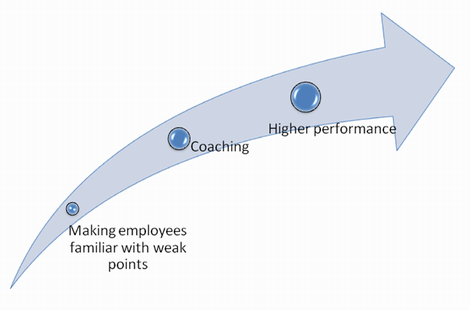
Balanced Scorecard system can do magic. Don’t believe it? Imagine how your employees will be motivated if they will be aware of own weak points? And what if you introduce a special system of bonuses for those who manage to improve a set of KPIs?

So, when using Balanced Scorecard, which KPIs are most important?

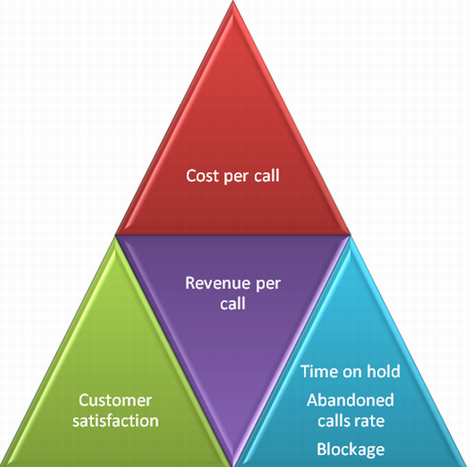
Firstly, this is revenue per successful call and cost per call. Any call center should bring profits (or if this is customer support service it should not be unprofitable). These call center metrics are considered most important and representative.

Of course, you need to take care of customer satisfaction, time on hold, blockage rate and rate of abandoned calls. With a Balanced Scorecard system this will be quite easy to do.
Measure call efficiency with contact KPI

Thursday, March 11th, 2010

What do you usually do if you are not satisfied with the quality of products and services? Yes, you dial number of a contact center to which calls are usually toll free. You naturally want to talk to representatives of companies that produced this product or rendered you particular services. You may know very little about the company and its approaches. You are not familiar with company policy and management strategy. In fact, you don’t care. Everything you are interested in is solving problems related to products and services.

For you, the person who answers the phone on that end, is a person who represents the entire company. This is the company’s face or, in case of call center, the “voice” of the company. If you have had an unpleasant experience with a particular call center you will not like the entire company. Why are we talking about this? It is to explain how important a call center is. Poor performance of a call center (customer support service) may result in poor performance of all company departments and overall performance of the company.

Evaluation of a call center performance is very important in financial terms. As said above low sales rate may be a direct consequence of a poor call center performance. If the products are not sold well or customers do not receive full information and support on the purchased products/services, your business may be in jeopardy.

Contact KPI shows performance of a call center

Use contact KPI to assess and improve business performance

Top managers from all over the world are actively using Balanced Scorecard system for business performance evaluation. This system evaluates separate key performance indicators (KPI) to provide you with the full picture of overall business performance. Each business has own KPIs, while call center managers need to focus on:

  1. Cost per call. If your call center is unprofitable, then why does it work anyway? You need to observe the balance and keep cost per call at affordable level, so that your employees get decent compensation and your company does not suffer major losses. Think of the ways to reduce cost per call, and in several months you will see real results.
  2. Revenue per successful call. If you call center sells products or services you need to make sure that you earn at each call as much as you can.
  3. First resolution call. Such calls are called one and done. It means that a caller resolves hiw problems with just one call.

Which service desk benchmark is most important to you?

Wednesday, March 10th, 2010

Business performance evaluation is perhaps one of the most important business processes. Net revenue is not the only indicator of how well you company is performing. Of course, making more profits is an ultimate goal of any company and net revenue is a very important indicator. But still, there are so many other factors and indicators showing how your business performs in the market.

Perhaps, you have noticed that almost all companies have own call centers and contract independent call center companies to work for them. Why would a company need a call center? In the modern age of telecommunication, ordering products or services by phone is a very common practice. Besides, potential customers often have questions about products and services, while current customers may have problems or concerns about purchased products/services.

Thus, call center is a linking element between customers and business. If this element fails to perform its core functions, the business is likely to have problems. The result of this may be decreased revenues and even losses.

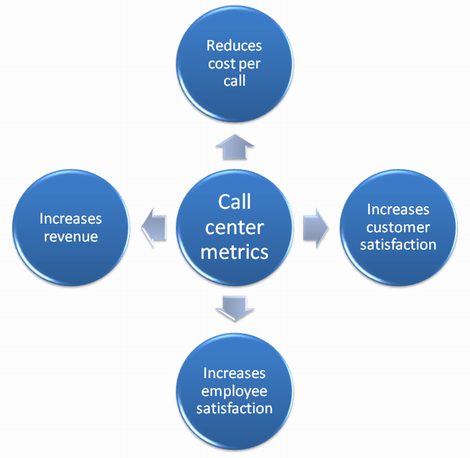
To evaluate performance of your call center, you need to use specialized software that does all the hard work for you. Balanced Scorecard system is known as a reliable and trusted business performance evaluation system. This program will help you find strong and weak points in the work of a call center. Sure, you need to answer one question that may not seem easy for you: “Which service desk benchmark is most important for call center?” The answer is quite ambiguous. The reality is that there are several most important key performance indicators (KPI) having the most influence on business performance. Call center metrics includes KPIs directly related to calls, their cost, customers, employees and their attitudes.

Which service benchmark to choose? Use BSC to find answers

Which service benchmark to choose? Use BSC to find answers

Service desk benchmarks

Service desk benchmarks

So, of you want to know weak points in the work of a call center you need to use Balanced Scorecard system and evaluate the following KPIs:

  1. Customer satisfaction. Ask you customers to rate conversation with the call center operator. Were all questions answered? Did call center operator talked to you politely? Were you fully informed on the issue you have been interested in? Customer satisfaction has a direct impact on revenues and number of new customers.
  2. Cost per call. If you are an ineffective manager who makes wrong decisions it may turn out that cost of one call may equal to the cost of a cheap product you sell. Try to analyze what factors influence cost per call, and what needs to be done to reduce it.

Sure, there are many more KPIs in call center metrics, which will be covere din the next articles on this blog.

Improving call center performance with KPI tool

Thursday, October 22nd, 2009

Why not visualize the strategy of improving of call center performance with strategy map? The latest version of BSC Designer PRO allows to create strategy maps, export them or print. Check more screenshots for details.

Guidelines to Managing Call Center Performance during Recession

Saturday, March 21st, 2009

Tough times call for using smart, sensible measures, and managing call center performance during recession periods calls for a renewed focus on measuring performance and employee retention.

The financial crisis threatens everyone, from companies big and small to their clients and consumers. Tough economic times mean cutbacks on almost every scale, from huge layoffs from companies that have suddenly seen record lows, to holding back on spending at the consumer level. For these reasons and more, managers have to come up with strategies in managing call center performance during recession. Those who fail to adapt to the challenging times will see their companies and organizations fail to survive the crisis.

The first thing to realize is that everyone, to some extent, will be worried about the possible effects of the financial downturn on the company and on them, personally. It would be a wise management decision to try and maintain or even boost morale, if at all possible. Hence, management should work closely with the human resources department in order to present a calm, unified front, as well as open communication channels with employees. This would also suggest that celebrations and award giving ceremonies, even if they should be somewhat less grand than they were in better times, should still not be canceled entirely. The company should project a feeling of determination to go on and continue to perform well, despite external circumstances.

Now, empty pronouncements without any real plans backing them up may help in the short term, but are sure to harm the company in the long term. Thus, before sending off any memorandums or messages through the company, management should be sure that the information they contain are up to date and relevant. There should be an underlying business plan for weathering the recession that the management has agreed upon and revised extensively. At the same time, this business plan should take good communication with the employees into account.

Essentially, times of crisis are times for the organization to slim down and focus on its core, on its best people. It becomes more important than ever to be able to measure performance in order to ensure that you are doing your best to keep your best people. In hard times, job mobility can actually increase as employees begin to reconsider their employment. Bad news or even just rumors, if left unchecked, can cause employees to migrate to other employers. The focus on communication as mentioned above will be the best measure to counteract this. If employees are aware that management and the other higher ups of the company are doing their best to control the effects of the recession on the company, they will have higher morale and confidence. They will be much less likely to jump ship, and more likely to stay with the organization.

Managing call center performance during recession, apart from these more general considerations, should also ensure a steady stream of real-time data. This performance data from the employees will provide important criteria in the case layoffs become unavoidable. Keep the top performers happy, and if you have to let go of any people, make sure that only the lowest performers go.

Performance Stop Lights in Balanced Scorecard Designer

Thursday, December 18th, 2008

BSC Designer 2.0 now supports performance stop lights, which are a great way to find indicators that need attention. For instance, if indicator’s performance is below 20% the stop light will be read.

The range value of stop lights, e.g. what is red, yeallow or green, can be customized. Learn more in BSC Designer manual.

The Importance of Performance Based Call Center Management

Sunday, April 27th, 2008

Metrics should be used to employ performance based call center management. With metrics, measuring the performance of call centers is made easier.

It is not easy managing a call center at all. A lot of people assume that it is easy to manage a call center, but it is not at all. This is because there are so many factors to consider here. However, it is very important to find effective ways and means to manage your call center, to ensure and facilitate its growth and success. So, how do you see your call center? How is its performance? If you have difficulty answering this question, then you should consider employing performance based call center management. This way, you can keep track of the performance of your call center representatives, to ensure quality service and growth for the establishment itself.

But how exactly can you keep track of the performance of every call center representative comprising your workforce? The answer to this is call center metrics. It is so hard to quantify the performance of every call center representative because there are so many factors to consider here. For instance, just how productive are the representatives at the job? Do they really satisfy the needs of the customers they handle? Do they give quality solutions to the problems presented by the customers? Are they able to come up with these solutions fast? And what about the average handling time? How long does the average phone call last for each representative? Attendance is also another factor to consider here. These are just some of the factors to consider when it comes to developing call center metrics. Surely there are more factors that have not been mentioned yet.

One important thing to remember about developing call center metrics is that less is actually better. Yes, there are many factors to consider; this is a point that has long been established already. However, when a large number of metrics are used to evaluate performance, then there is more room for extraneous factors. These extraneous factors just might make it all the more difficult to get down to the bottom of measuring performance. In fact, it is actually recommended to use just five metrics for your call center balanced scorecard. Most call centers nowadays use more than twenty-five metrics for their scorecard. Imagine how many extraneous factors can tamper with the real information that you should be measuring here! As much as possible, just limit your metrics to five. Choose the ones that are relevant to call center performance at its very core. The five metrics that are strongly recommended include Customer Satisfaction, Call Cost, First Call Resolution, Agent Efficiency or Utilization, and Overall Call Center Performance.

More often than not, you would find that one of the five metrics mentioned would actually be related to other metrics on the list as well. For instance, the metric Customer Satisfaction is actually influenced by a number of factors, which include the other recommended five metrics as well. When you want to quantify customer satisfaction, you would have to look at First Call Resolution, Call Quality, Speed of Answer, and the like. This is another reason why it is better to use only a few metrics when you want to employ performance based call center management. Different call centers in the industry might use different sets of metrics. This is understandable because the metrics here should be in line with corporate goals and objectives. Since these differ, then you can expect the metrics to differ as well.

The Role of Help Desk Key Performance Indicators

Friday, April 4th, 2008

Help desk key performance indicators are important factors to use when you want to measure the performance of call centers. These indicators quantify the necessary aspects for accurate measurement.

In the industry of call centers, it is very important to employ help desk key performance indicators. This is because these indicators are developed to evaluate how far along a certain call center is in achieving its corporate goals and objectives. To do this, key performance indicators or KPIs are then needed, to determine the performance of the help desk, and that of the call center as a whole.

The key to optimizing the manpower and resources of call centers lies on effective performance management measures. What are these performance management measures? These are actually quantifiable aspects used to effectively measure the performance of each and every member of the workforce. Performance management measures actually include constant monitoring of agent performance, formulation of objectives, proper training of agents, recognition of agents who have been excelling in terms of performance, and evaluation of agent performance. To do this efficiently, KPIs are also used for this endeavor.

KPIs are essential parts of performance management. In ensuring effective performance management of the help desk, you just cannot do without KPIs. In fact, these KPIs are very helpful in assisting agents and representatives as to what calls should be prioritized and how to process the calls that are being handled. However, you have to note that these KPIs should not be defined before the corporate goals and objectives of the call center are defined. This is because the KPIs exist to smoothen out the process of achieving these goals and objectives. This is the main purpose behind the existence of KPIs, after all. These key performance indicators assist in measuring the current performance of the help desk, in relation to the goals and objectives originally set. Thus, you cannot expect two or three help desks to be utilizing the same set of KPIs. This would mean that the call centers have the same goals and objectives that they want to achieve, and this is just not possible.

However, once these KPIs have been implemented, it is important for all members of the workforce to be made aware of them. After all, these are the quantifiable factors that would be used to measure the performance of everyone on the workforce, particularly the help desk. Also, making your workforce aware of these KPIs can motivate them to perform better as well. Priorities can also be aligned according to corporate goals and objectives. Furthermore, since KPIs have to be quantifiable in nature, this implies that certain software should be used to measure them accurately. Help desks should be ready to invest in such software for effective performance management.

It is actually wise to use a limited number of help desk key performance indicators. Less is more, as people would say. If you use many KPIs, measuring performance here would become too complicated. There would be too many extraneous factors that have influence on the whole measuring process. Thus, it is recommended to limit the number of KPIs to just five. Choose the KPIs that are relevant to the nature of the business itself. These KPIs should also be in accordance to the goals and objectives originally set. For the most part, these are the commonly used KPIs: first call resolution, call cost, agent efficiency, customer satisfaction, and overall call center performance.

Measure and Control Call Center Performance

Sunday, March 23rd, 2008

To measure and control call center performance, you will need to gauge the rate at which it is performing. These measures can show you how.

Simple call centers evolving into multi-channel contact centers do not just happen in a whiff. Adding or upgrading technologies and expanding staff skills are important following the addition of new applications such as e-mail and web chat. Also, it is necessary to determine which performance measurements should be used for this new kind of operation.

Performance measures that are associated with service are said to be the most important. These measures may work for both call and contact centers or change depending on the type of transaction.

An example of call center performance measure is blockage. This accessibility measure indicates the rate of customers at which they cannot access the center at a specific time due to inadequate network facilities. Measures that indicate blockage or busy signals by occurrences of “busy trunk lines” are utilized by most call centers. Failure of a blockage goal enables a center to meet its rate of answer goal by blocking excess calls. It may appear as if the call center is doing a good job at managing call queues, but it can actually have a negative impact on customer accessibility.

The call center should also carefully know how much facilities are needed for email server capacity and bandwidth to avoid huge quantities of emails from overloading the system. The same goes for the number of lines that support fax services, which must be adequate enough to allow reasonable blockage.

Another way to measure call center performance is through abandon rate. Call centers usually gauge the number and rate of abandons because both correlate in terms of revenues and retention. However, it has to be noted that the abandon rate is not completely under the control of the call center. While the average waiting time in queue can affect abandons, there are a lot of other factors affecting this number, among which include availability of service alternatives, time of day, caller tolerance and many others. Also, while the abandon rate measure is not commonly related with email interactions, it applies, however, to web chat communications.

Self-service availability and utilization is also an important accessibility measure and is commonly gauged by self-service menu points and methodology, demographic group or time of day.

On the other hand, the most common measure for speed of answer in a call center is the service level. Meanwhile, the longest delay in queue (LDQ) is another gauge for speed of answer, which is used to indicate when it is necessary for immediate staffing reactions. LDQ is categorized into two namely longest delay to answer and longest delay to abandon. The former is the delay for a customer’s transaction to be finally handled by the agent and the latter is delay for a customer to abandon the contact.

These measures usually gauge the speed of call center performance. There are still many other performance measures applicable to call centers, both in-bound and multi-channel. These may be used to measure individual agent performance or overall call center operations. In all cases, these measures should be used to determine performance excellence as well as gaps that need improvement with different adjustments.

Customer Service Performance Tips

Monday, March 17th, 2008

These customer service performance tips can give your business the edge in today’s fiercely tough competition.

Competition nowadays has become even more cutthroat. Customer expectations are getting higher and there is more price comparing, among many factors that need to be considered in order to get a leg up in the competition. Competitors are doing all they can to keep their customers and gain new ones as well. It’s a simple fact that presents a cold, hard truth: Satisfy your customers and you keep them. If you can’t, then you lose them.

So how do you make sure you re not lagging far behind in this fiercely competitive environment? It’s that simple. Good, quality customer service. By putting value to your customer’s needs, having the ability to create strong customer relationships and finding tailor fit solutions to customer problems, you can ensure the success, if not the survival of your business. In whatever facet of doing business with customers, it is important to give them a higher quality of service than those of your competitors. You need to treat every customer as a positive experience and make the customer feel that s/he is highly valued in your business as well. By giving your customers a positive and pleasurable experience, they will keep coming back for more of your products and services.

Customers have also become more demanding today. There are a number of ways that you can do to win them over. A very important thing you should always keep in mind is to put your customers first. Focus on them and pay close attention to what they really need. Know and understand what their needs, concerns, expectations and priorities really are. This way, you go beyond more than just merely serving them but also demonstrating that you care.

Also, whether you admit it or don’t, you should keep in mind that your business exists because you are in sales. You are being constantly evaluated by your customers so each time you interact with them, you should always show concern and care for them. Remember that whatever you say or do can affect your relationship with the customer and the reputation of your business as well. By constantly giving them exceptional service, you build goodwill with your customers and strengthen your business’s sustainability and credibility as well.

To ensure a culture of customer service excellence in your company, get everyone in your team involved in establishing office guidelines and policies that require each one to maintain core values that are important to both the customers and everyone in your business.

Choose effective words or phrases that demonstrate care and professionalism in your everyday interaction with customers. Also, establish a system for measuring customer care. These include number of customer complaints, retention rates and satisfaction rates. Know which measures are important and commit to improve them.

It is only right to treat your staff properly if you want them to treat customers the same too. You cannot expect them to be ‘happy to serve’ your customers if they are not pleased with how you are treating them. Let your people feel that they are working with, and not for you. This will encourage true cooperation so that your business can achieve customer service excellence.